

Behavioral Theory & Insights

The Three Laws of Human Behavior

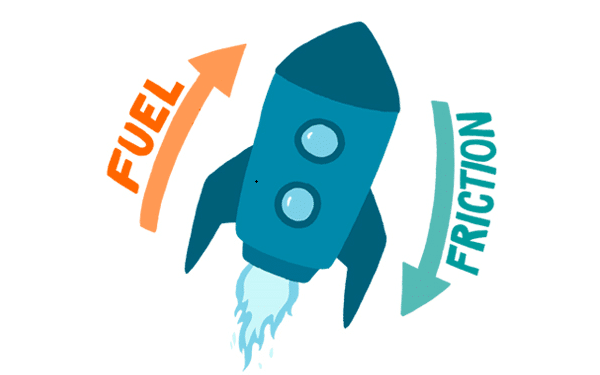
Human behavior is remarkably complicated. And yet, just as Newton's laws of motion distill three fundamental truths about the physical world, the three laws of human behavior describe three fundamental truths of human behavior: People tend to stick to the status quo unless the forces of friction or fuel push us them off their path; behavior is a function of the person and their environment; every decision includes tradeoffs and the potential for unintended consequences.


Why We Use Less Information Than We Think to Make Decisions

How much information do you need to make up your mind? Our research in various domains of decision making shows that we make decisions more quickly and based on less information than we think. This has important implications in an age in which information is plentiful.

Good for Some, Bad for Others: The Welfare Effects of Nudges

Nudges have become popular policy instruments, for good reasons. However, recent studies show they might sometimes backfire or cause undesired distributional effects – differing impacts across people. Such studies highlight the importance of careful policy analysis that examines both the average and distributional impacts of nudges.

Balancing Motivational Orientations for Improved Goal Pursuit

Researchers have long maintained the importance of individual differences in motivational orientations for understanding personality and behavior. Recent findings suggest that strengthening and integrating four different motives in particular may make us better decision makers and more effective at achieving our goals.

Supporting Decision-Making under Uncertainty: Nudging, Boosting or Both?

Heuristics play an important role in daily judgments and decision-making, but a scientific debate has been ongoing as to whether heuristics result in systematic errors or make us smarter. Both approaches have resulted in tools to support decision-making. Nudges address systematic errors and biases, while boosts support informed decision-making under uncertainty. But can these two opposing approaches be integrated into one framework?

Behavioural Science, Rationality and Public Policy

The language of rationality is closely tied to ideas from behavioural science, economics and nudge theory, but how does it shape the way we make public policy and should we be casting it under a critical eye? Read this post to find out more.

What is the Future of Behavioral Research and Large-scale Nudges? Five Practical Tips

By Nathan Maddix   Can Nudging Overcome Physics Envy? As is now well-known, tremendous results have been found for nudges – behavioral interventions designed to facilitate choice for welfare-promoting outcomes. In my work over the last 5 years, I have sought not only to design and administer nudges, but also to understand how economists and [...]

Changing Your Mind

Changing one’s mind is a difficult, painful process. What kind of appeals are effective at changing the minds of others? How can you work on evaluating information objectively, such that you would reconsider your previous ideas?

Go to Top