

Behavioral Theory & Insights

Three Behavioral Insights into the Aging Mind

Behavioural science has contributed much to the understanding of decision-making in the last few decades. We now understand how heuristics and biases can influence our thinking, perceptions, choices and behaviour. Yet, many of the frequently cited studies from behavioural science have been conducted on students, typically in their early twenties. Consequently, people often ask whether these findings still hold in other generations: Does our decision making process differ as we get older? Do we become more or less ‘rational’? And if minds do differ, how does the 20 year old mind differ to the 70 or 80 year old mind?
Obama, Behavioral Insights and Bureaucratic Success

On 15th September 2015, President Obama issued an executive order mandating US government agencies employ behavioural insights to enhance their work (read a White House-authored Fact Sheet on the order). On the face of it, this is an unqualified good for behavioural science. Yet Presidential Terms are short, and the current one has only a year to run. Whether such an executive order will have the impact it should will depend on commentary and promises made in the febrile atmosphere of a US election. Political support is valuable, but political polarisation can mean bureaucratic paralysis. This post takes a brief glance at bureaucratic success in the US, EU, UN and UK.

By |2022-02-17T07:04:24+00:00October 22nd, 2015|Categories: Behavioral Theory & Insights, Government & Civic Behavior|

Five Reasons Why We Compromise Our Privacy Online

Historically, most of us have been concerned about information privacy on the internet. But when it comes to our actual behavior, many of us liberally share personal information online, a finding termed the ‘privacy paradox’ in the academic literature. Why this apparent gap between attitudes and behavior?

The Nudge Is Not Enough! The Love Story Between Behavioral Science and Practical Applications

Nudges are great, but they aren’t enough. While they are elegant, nudges are (often) just tweaks augmenting a pre-existing service or policy regardless of its quality, appropriateness or fitness. It is time to go from nudging to behavioral design.

Behavioral Economics and Healthcare: A Match Made in Heaven

By Benjamin Voyer   Out of all the areas of public life that can benefit from the applications of behavioural economics (BE) principles, healthcare is probably the one where it can make the biggest societal contribution. There are two main reasons why the healthcare industry should welcome (more!) BE insights. The first reason is that many [...]

Using Psychology to Comprehend War

By Tom Wein   Behaviour depends on context - and conflict is the most extreme context of all. There have been a series of attempts, of varying value, to understand behaviour in that scenario - by academics, governments and NGOs seeking to predict and reduce conflict, and by combatants seeking an advantage. In recent years, [...]

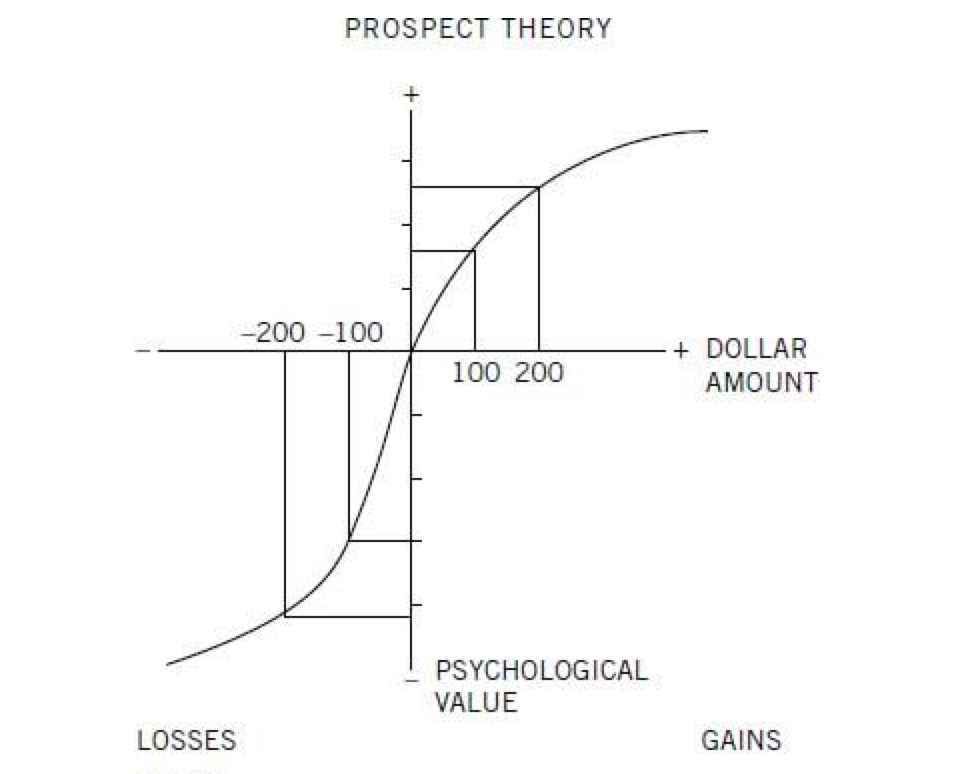
How I Taught Prospect Theory to My Son

By Diogo Gonçalves   Dear son, today I want to talk to you about how people make decisions. Many choices in our lives have uncertain outcomes. Choosing between two alternatives often involves a risk, such as whether you should spend your birthday money on a new bicycle or on a PlayStation. Each choice is like two sides of a coin: there is a [...]

No I Won’t, but Yes We Will: How the Social Side of Decision-Making and Behavior Is Worthy of a Closer Look

By Guy Champniss   I still have vivid memories of when I was little and I started to misbehave, my mother would bend down and whisper something in my ear. Each time, it was the same thing. And each time, it stopped me dead in my tracks. ‘People are watching you’ she’d say. I’d look around [...]

Why Do People Behave the Way They Do?

By Eyal Winter   Many of us tend to think of decision making as a process in which two separate and opposite mechanisms are engaged in a critical struggle, with the emotional and impulsive mechanism within us tempting us to choose the “wrong” thing, while the rational and intellectual mechanism that we also carry inside us [...]

Behavior Change Is Political Change

When it comes to behaviour, politics is never absent, argued Mike Kelly, at a UCL Centre for Behaviour Change seminar on policy and evidence.

Go to Top