


Behavior Change Is Political Change
When it comes to behaviour, politics is never absent, argued Mike Kelly, at a UCL Centre for Behaviour Change seminar on policy and evidence.
When it comes to behaviour, politics is never absent, argued Mike Kelly, at a UCL Centre for Behaviour Change seminar on policy and evidence.
The new journal Behavioral Science & Policy just published a PDF of its inaugural issue. You can download it at: https://behavioralpolicy.org/journal/ Here's what the editors have to say about the first issue: This first issue is representative of our vision for BSP. We are pleased to publish an outstanding set of contributions from leading scholars who have [...]
A common interpretation in behavioural finance is that rationality is the result of a pure cognitive process which can be behaviourally biased. While cognitive biases are influences that affect rationality from within the cognitive system, affective biases refer to those influences that affect the cognitive system from outside. Unfortunately, the assumption that rationality is a pure cognitive process is not well motivated. Rationality results from the intrinsic interaction between cognition and emotions.
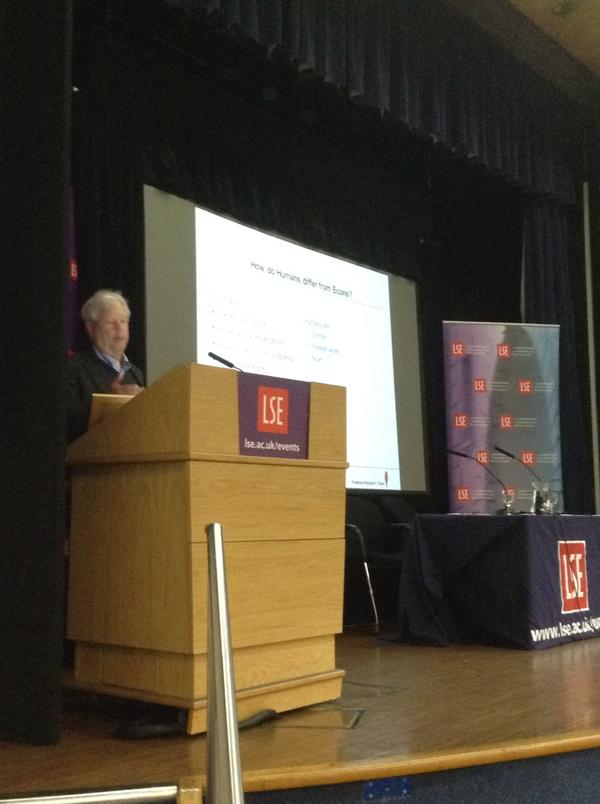
Richard Thaler amused as much as informed, as he surveyed the intellectual battles behavioural economists have fought, in a talk at the LSE.
On the train from London to Brussels, the passenger sitting next to me suddenly gets agitated. I look at him puzzled, as this is a wagon entirely populated by people traveling for business and sudden noises or exuberant behaviour are noticeable like being dressed in a pink suit. My travel companion apologises and adds:"Damn, I [...]